
By Aurelius Consulting Group
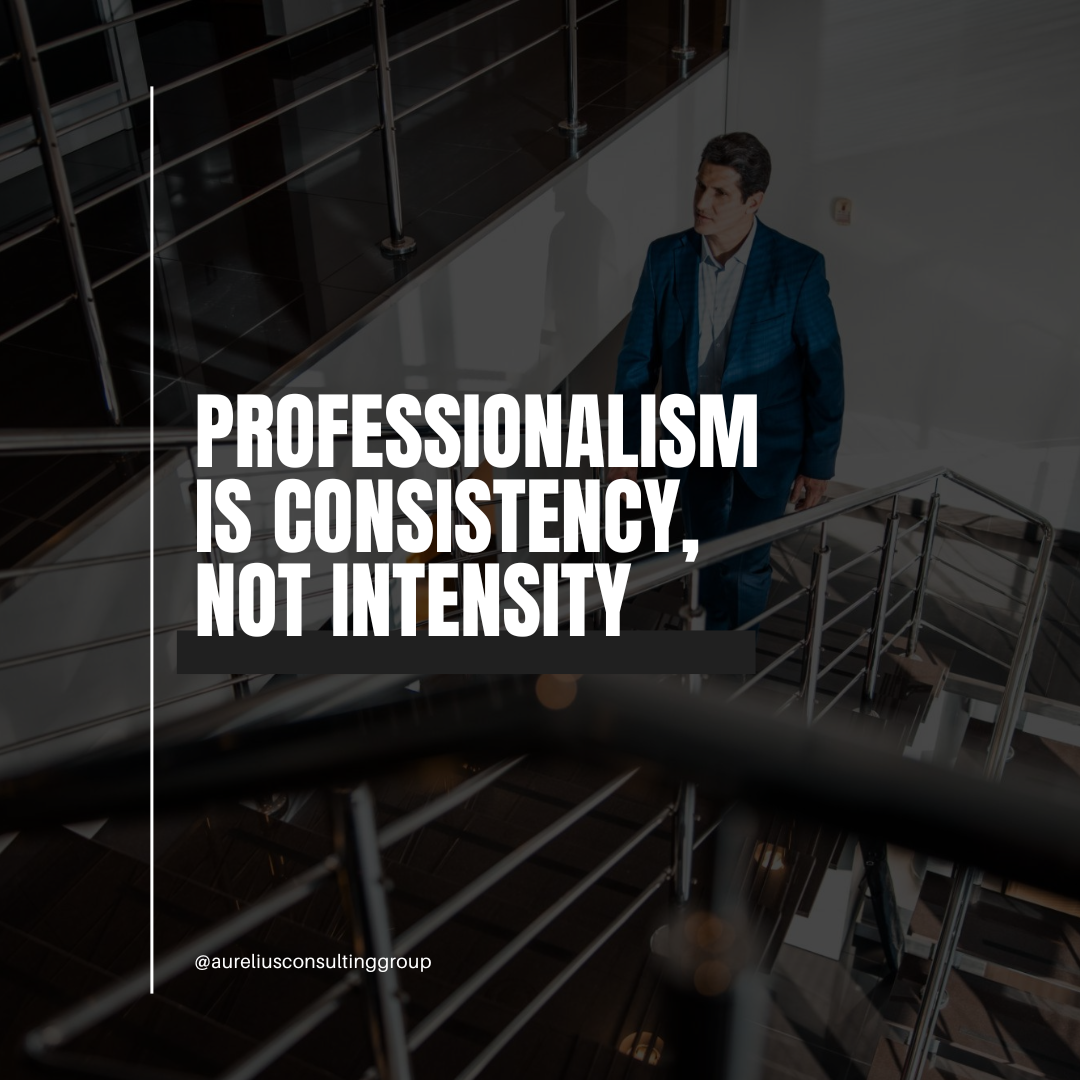
In today’s fast-paced business world, professionalism often gets misinterpreted as the ability to deliver powerful, high-impact results in a short time frame. However, at Aurelius Consulting Group, we believe that true professionalism is best defined as reliability over time. Consistency in our actions and results builds trust and forms the bedrock of enduring business relationships. Let’s explore why consistency trumps intensity in creating a lasting impression.
The Myth of Intensity in Professionalism
Intensity can be captivating. A whirlwind of activity can appear impressive at first glance. Yet, this approach can lead to burnout, unmet expectations, and a reputation for inconsistency. That flashing brilliance may dazzle temporarily, but it does not sustain success. Here are some critical considerations:
- Short-lived Impact: Intense efforts often result in immediate, but fleeting, outcomes.
- Risk of Burnout: Continually pushing for high intensity can lead to exhaustion and diminished performance.
- Hollow Trust: Clients may appreciate rapid results at first but will soon seek reliability and steadiness.
Revisiting the Concept of Professionalism
At Aurelius Consulting Group, our guiding principle surrounds the belief that professionalism is a manifestation of consistent reliability, illustrated through these critical components:
1. Building Long-term Relationships
Consistent delivery of results not only fosters loyalty but also helps in establishing robust long-term relationships. Clients and partners value reliability, which translates into collaborative success over time.
2. Setting Realistic Expectations
When you prioritize consistency, you can set and manage expectations effectively. This approach encourages transparency and aligns objectives, ensuring everyone is on the same page throughout the project lifecycle.
3. Developing a Sustainable Approach
Incorporating consistent practices prevents the cycle of frenzied efforts that often leads to burnout. It allows teams to focus on sustainable strategies that ensure long-lasting success. Here are some methods to achieve this:
- Establishing Routines: Daily or weekly routines can create a solid foundation for consistency.
- Measuring Progress: Regular assessments of team performance and project milestones nurture continued reliability.
- Encouraging Feedback: Cultivating a culture that emphasizes feedback ensures constant improvement and accountability.
The Transformational Power of Consistency
Consistency empowers both individuals and organizations to evolve into trusted partners and experts in their fields. Here are a few ways to leverage this:
1. Enhancing Reputation
Consistency earns respect, builds credibility, and positions your brand as a leader in the industry. Over time, this cultivates a powerful reputation that speaks volumes.
2. Attracting the Right Clients
A solid track record of consistent performance will attract clients who value reliability over hype. These partnerships often lead to a more fruitful collaboration that benefits both parties.
3. Fostering Employee Engagement
When teams experience consistent support and communication, they are more engaged in their work. This leads to higher job satisfaction and improved retention rates, allowing for a stronger, more cohesive organization.
Conclusion: Embracing Consistent Professionalism
In the world of business, there will always be pressures to deliver immediate results. However, the real game-changer is the decision to prioritize consistency. At Aurelius Consulting Group, we redefine professionalism as a journey built on time-tested reliability rather than fleeting bursts of effort. By making consistency a core value, you position yourself and your organization for sustainable success.
If you want to thrive in today’s competitive market, remember: professionalism is consistency, not intensity.
Join us on this journey towards redefining professionalism. Embrace reliability, and you won’t just survive; you will thrive. Let’s shape the future together with a commitment to consistency.
Leave a Reply